From Concept to Implementation: How ASTRUM IT Develops Custom Software Solutions for Industry, Medical Technology, and Public Institutions
Custom software development is much more than just program code. It combines creativity, technical expertise, and a deep understanding of the industry. In an interview with our Head of Software Engineering, Lutz-Oliver Beck, we gain fascinating insights into how ASTRUM IT transforms initial ideas into tailor-made applications that make processes in various sectors—such as manufacturing, medical technology, and public institutions—more efficient and secure. Lutz explains how we support our clients from conception through development to long-term operation, and why every project is a shared learning process for us.
Lutz, what do we at ASTRUM IT mean by “custom software development,” and what is the greatest value it offers our clients?
At ASTRUM IT, we define custom software development as solutions that are consistently tailored to our customers’ specific technical, organizational, and regulatory requirements. Our software is not a off-the-shelf product; rather, it is developed specifically for each use case, often as a proprietary solution in complex fields such as medical technology, industry, or public administration.
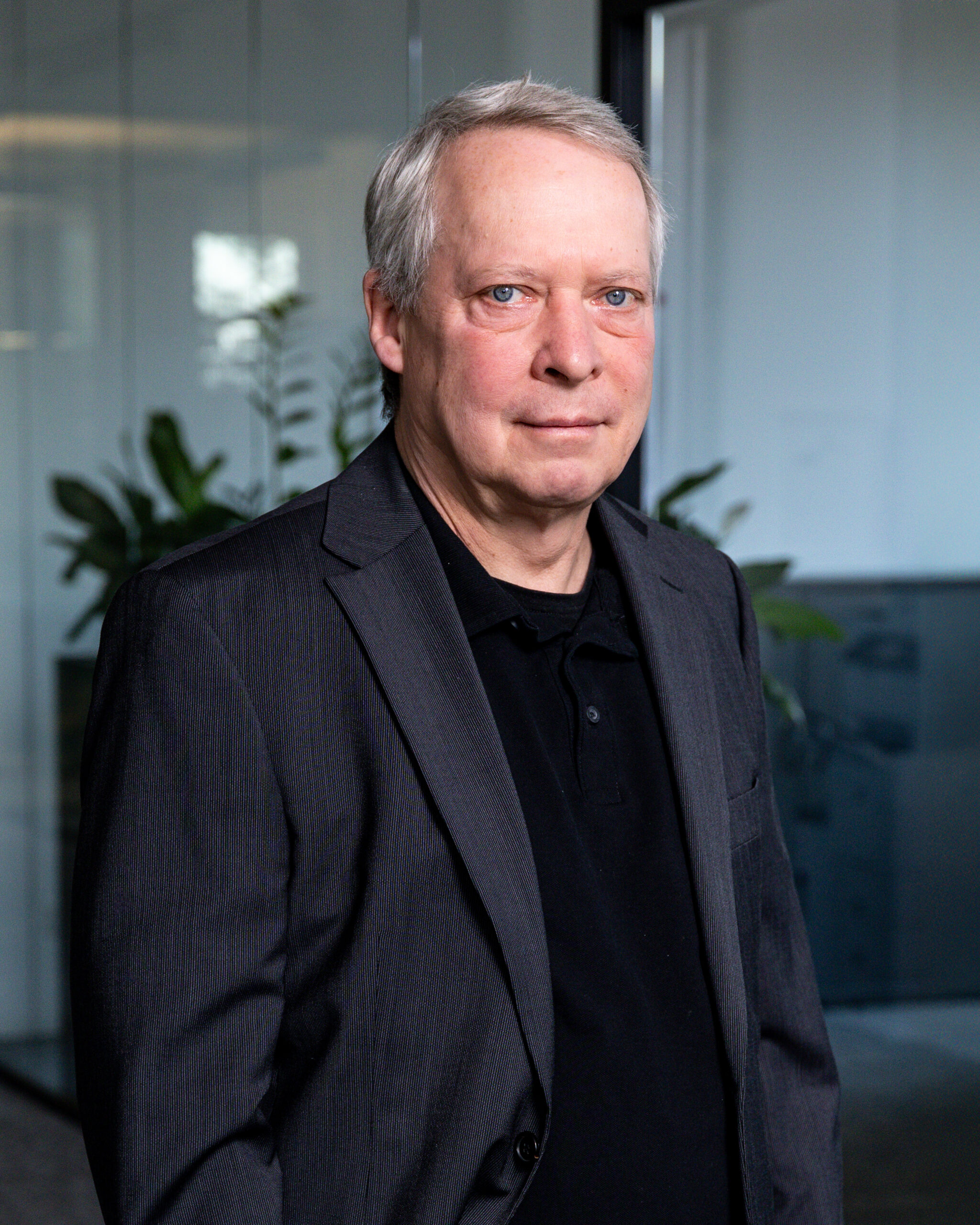
Lutz-Oliver Beck, Division Manager Engineering ASTRUM IT
In my view, the greatest value we provide to our customers lies in efficiency, knowledge transfer, and flexibility. Close collaboration between our teams and the experts on the customer side also facilitates a sustainable transfer of knowledge. At the same time, custom software allows us to respond quickly and effectively to changing requirements or conditions.
What phases does a typical project go through—from the initial idea to the finished application?
It always begins with a clarification phase, during which goals, requirements, and framework conditions are defined collaboratively. This is followed by a conceptual phase, in which the architecture and technological foundations are established.
Implementation then proceeds iteratively and agilely, usually in short development cycles with regular feedback. This allows the software to be developed step by step while remaining adaptable at all times. The project typically does not end with a one-time go-live, but rather with supported commissioning and, if necessary, maintenance and further development.
In which industries are you currently particularly active, and what specific requirements do sectors such as healthcare or manufacturing entail?
Our current focus is on medical technology, the public sector, and manufacturing. In the medical technology sector, regulatory requirements, quality assurance, and traceability are key priorities. In the industrial sector, on the other hand, issues such as integration into existing IT landscapes, scalability, and long-term stability are crucial. The public sector, in turn, often demands a high degree of transparency, sustainability, and maintainability over long periods of time.
How does ASTRUM IT ensure that software solutions remain maintainable, secure, and expandable in the long term?
The foundation for this is a clean architecture with clear structures and modular concepts. This is complemented by automated testing, code reviews, pair programming, and the targeted use of AI in the respective development environment. We incorporate security from the very beginning—both technically and procedurally. Clear documentation and transparent decision-making ensure that software remains expandable over the long term.
Which trends or technologies are currently having the greatest influence on development work?
Cloud technologies, DevOps approaches, and artificial intelligence are usually the most influential factors. They enable scalable architectures, faster development cycles, and new functionalities. For us, however, it’s always crucial to use technologies only when they offer real added value for the specific use case.
What makes a software project successful for you personally?
For me, a project is successful when it’s compelling from a business perspective, technically sound, and accepted by users. Equally important is a collaborative, transparent partnership. If the project ultimately results in working software, acquired expertise, and a solid foundation for further collaboration, then it was a success.
Thank you very much for the interview, Lutz!
Custom software is created where standard solutions reach their limits.
Are you planning a new project or looking for an experienced development partner? Let’s work together to figure out how we can turn your vision into a working application!