Focus on Digital Accessibility: A Look Behind the Scenes of the Workshop at ASTRUM IT
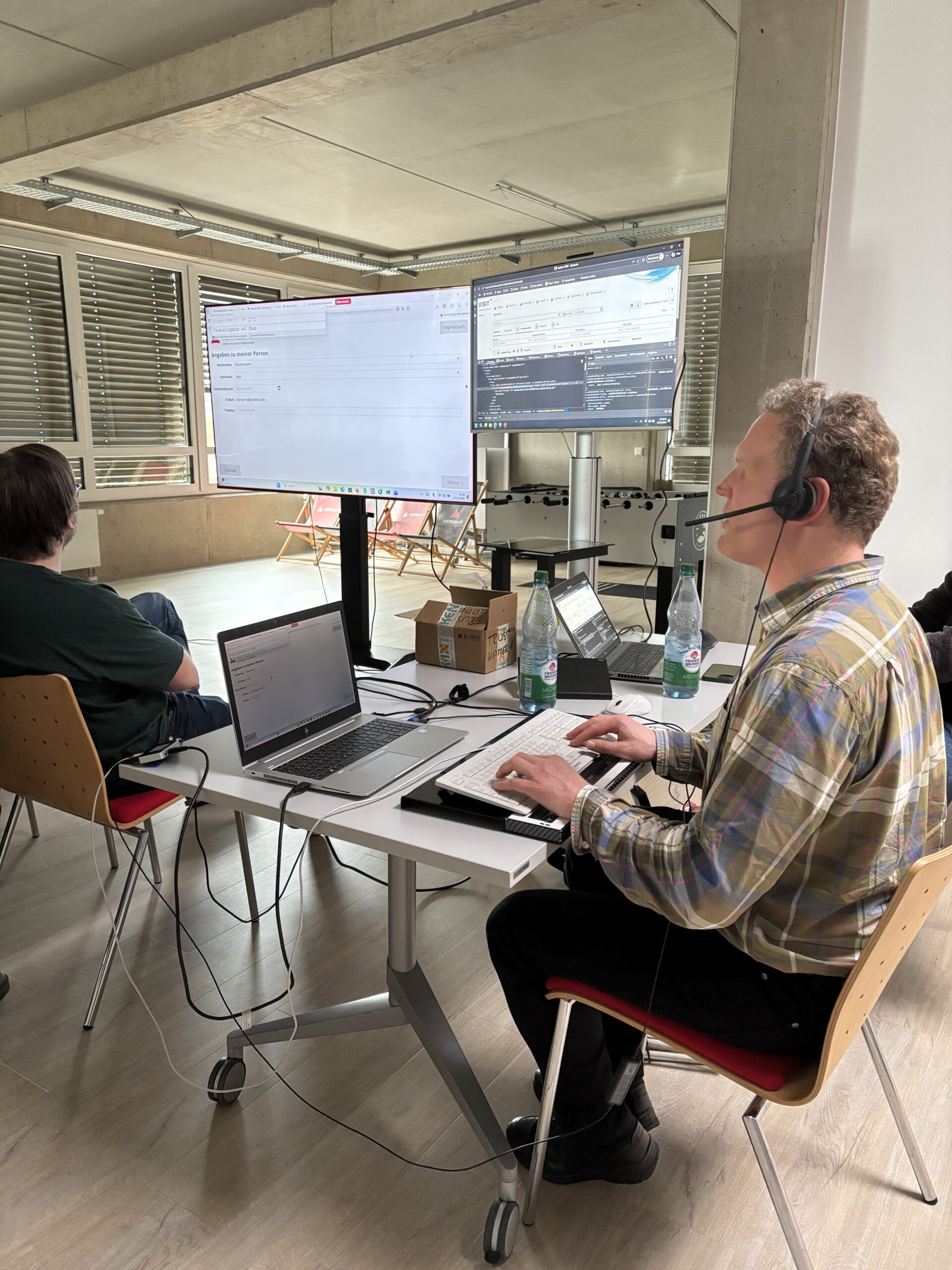
In late February 2026, a special workshop for the VISIT product development team was held at our ASTRUM IT headquarters at Nordostpark 33. For four hours, the focus was entirely on digital accessibility—from legal fundamentals to practical testing of our own product. In this interview, our UX designers Laura and Dominik explain why this topic affects everyone and what insights they took away from the workshop.
Laura, why did ASTRUM IT focus on the topic of accessibility?
Laura: In software development, accessibility is no longer just a “nice-to-have”—it’s a fundamental necessity. Especially with our
Laura, UX-Designerin at ASTRUM IT
VISIT is a software platform designed for visitor and yard management—a product used daily by many different user groups. We want to ensure that absolutely everyone can use it. The workshop is intended to help us build a shared understanding within the team and familiarize ourselves with the technical and legal foundations.
Dominik, what made this workshop special?
Dominik: Our speaker, Simon, made the topic incredibly accessible. He is blind himself, works as a developer and tester, and showed us how he uses a Braille display or a screen reader. The live demonstration was particularly impressive, as the concrete example made it clear just how important good structuring, alternative text, and logical navigation are for the user experience when using assistive technologies.
Laura, you tested your own product, VISIT, for accessibility. How did that go?
Laura: This made the topic not just theoretical, but very concrete and tangible. Simon tested our product, VISIT, focusing in particular on the online check-in and the web UI. This allowed us to see in real time which elements are easily accessible, where there are still obstacles, and how initial improvements could be implemented.
Dominik, UX-Designer at ASTRUM IT
Dominik: What was particularly interesting was that not only we, but also major providers, still face challenges when it comes to accessibility. This showed us that creating accessible software is an ongoing process that must be continually reviewed and improved.
What insights did you take away from the workshop?
Laura: A key “aha” moment came from using screen readers. For the first time, participants gained a real understanding of how blind people use software—for example, how they navigate through content, make sense of a page, and orient themselves. It also became clear how quickly and efficiently these tools can be used, but at the same time, how quickly one reaches their limits when content is not cleanly structured or technically marked up correctly.
Dominik: The shift in perspective was particularly striking: elements that are visually present for sighted users sometimes play a completely different role for screen reader users, while seemingly incidental content suddenly becomes central. A lack of semantic structure, unrecognizable interactions, or insufficient markup were thus experienced as real barriers—for example, when menus are not recognizable as such or headings have not been technically marked up correctly. This experience was complemented by direct dialogue with a person affected by these issues. The opportunity to ask questions and learn firsthand how digital barriers impact daily life was perceived as particularly valuable.
What’s next for ASTRUM IT?
Laura: This topic remains firmly on our agenda. Going forward, we want to pay closer attention to accessibility right from the concept phase and develop guidelines for our projects.
Dominik: We also want to share our knowledge within the team and perhaps help other projects at ASTRUM IT become more accessible.
Finally: What advice do you have for other development teams?
Dominik: Treat accessibility as an integral part of your development process, not as an extra task. Even small adjustments can have a big impact.
Laura: And bring in expertise early on. Workshops like this one are eye-opening—literally.
Conclusion
The workshop with Simon reminded us once again that accessibility is a central component of modern software development and goes far beyond technical details. For our VISIT team, the event provided important inspiration for making digital products even more inclusive, understandable, and accessible in the future.